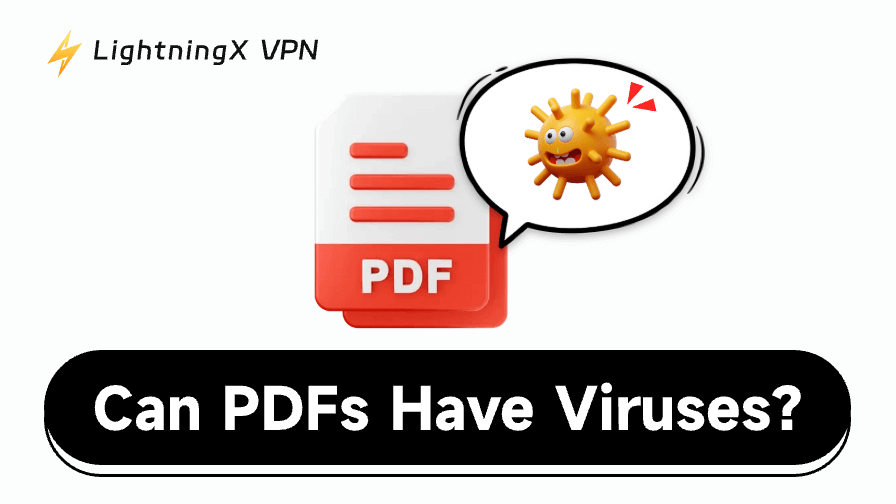
You receive an email attachment. It looks like a normal document. But before you click, you hesitate. You wonder, can a PDF have a virus? The short answer is, yes, it can.
PDF files are popular, but they are not always safe. In this guide, we explain the hidden risks of a PDF file and show you exactly how to protect your online safety.
Can a PDF Have a Virus? The Simple Answer
Most people think that PDF files are just digital versions of paper. We use them every day for work, school, and maybe other situations. We tend to assume they are safe to open and read. However, can a PDF have a virus hidden inside? Yes, absolutely.
Adobe designed PDFs to be very powerful. They can do more than just show text. Apart from that, they can run scripts and open links. Hackers also know this. They often use these features to hide bad code, which is dangerous for common users.
When you open an infected PDF, it might look normal. You might read the text file without issues. But in the background, a virus starts running.
It does not need you to click an .exe file. The PDF format itself is the carrier. So, you must treat every PDF with caution. Read on and find out how these viruses hide inside the file.
How Do Viruses Hide Inside PDF Files?
It’s necessary to know how hackers use a few specific tricks to hide malware. Here are the details.
Hidden Scripts
PDFs can run a coding language called JavaScript. This is the same language used on websites. Legitimate files use it for forms. But hackers use it to attack you.
When you open the file, the script runs automatically. It tells your computer to download a virus from the internet.
Fake Buttons and Pictures
Attackers may conceal harmful files within the PDF. There may be an image with the words “Click to View.” You won’t see an image if you click it. A virus is being launched by you. The PDF functions similarly to a Trojan Horse or a wrapper.
Breaking Your PDF Reader
Viruses can attack the software you use to read PDFs. If your Adobe Reader is outdated, it has flaws. The malicious PDF disables the app. Once the app crashes, the virus takes control of your system.
What to Do If You Open a Virus
Have you clicked on a malicious PDF? Don’t panic. Proceed immediately with these steps.
- Go Offline: Unplug your internet cable or turn off Wi-Fi. This stops the virus from communicating with the hacker.
- Close the File: Close the PDF reader. Use your Task Manager to make sure it is completely closed.
- Run a Scan: Launch your antivirus program. Do a “Full System Scan.” Don’t merely perform a fast scan. Allow it to examine each file.
- Check Your Startup Apps: When you turn on your computer, some viruses attempt to launch. Look through your settings to see if any odd apps are configured to open automatically.
- Change Passwords: Change your bank and email passwords after cleaning your computer. To be safe, use a different device for this.
Also read: How to Get Rid of Virus on iPhone: 7 Effective Steps
How to Change Settings to Stop Viruses
You can greatly increase the security of your PDF reader. All you have to do is adjust a few settings. This prevents the virus from operating even if you open the file.
Turn Off JavaScript
JavaScript in PDFs is not necessary for the majority of users. Turning it off stops most attacks.
- Open Adobe Reader.
- Go to the Menu > Preferences.
- Locate the JavaScript tab.
- Check the box labeled “Enable Acrobat JavaScript.”
Turn On “Sandboxing”
Sandboxing is like a jail for the PDF. The sandbox keeps the file inside the program if it contains a virus. It cannot access the system files on your computer.
- In Preferences, go to Security (Enhanced).
- Verify that “Enable Protected Mode at startup” is selected.
Update Your App
Security flaws are constantly fixed by software companies. Update as soon as your PDF reader requests it. An outdated version gives hackers easy access.
How to Check If a PDF Has a Virus
Before you open a bad file, you can identify it. All you have to do is search for warning indicators. Here’s how to use your eyes to determine whether a PDF contains a virus.
Examine the File Name: Is it strange? Watch out for names like invoice_8329.pdf.exe. Windows often hide the last part. Make sure it ends only in .pdf.
Check the Sender: Did you request this file? If you receive a “receipt” from a stranger, don’t open it. Even if it comes from a friend, check the wording. If the email sounds like a robot wrote it, be careful.
Check the File Size: A text document should be small. A straightforward invoice is suspect if it is exceedingly huge (several megabytes). There may be secret coding in it.
Watch for Urgent Language: ackers aim to make you feel anxious. Be careful with files named “URGENT,” “Overdue Payment,” or “Legal Notice.” They want you to click without thinking.
If you are still not sure, do not open it. Upload the file to a free online scanner like VirusTotal.
What Kind of Damage Can a Bad PDF Do?
If you want to know if a PDF has a virus, you should know what occurs if it does. The outcomes may be frightening.
- It Can Lock Your Files (Ransomware)
This is the worst-case scenario. You open the PDF. The virus locks all your photos and documents. You are no longer able to open them. In order to provide you with the key, the hacker then requests payment.
- It Can Steal Your Passwords
Some viruses are quiet. They record what you type while sitting at your computer. They take your email login credentials and bank passwords. It’s possible that you won’t become aware of your infection until money disappears.
- It Can Fake a Website (Phishing)
Sometimes the PDF is clean, but it contains a link. The text says, “Click here to verify your account.” The link takes you to a fake website. If you type your password there, the hacker gets it.
Tip: Use LightningX VPN for Total PDF Safety. Antivirus software isn’t enough; malicious PDFs often try to “phone home” to hackers.
LightningX VPN secures your connection by hiding your IP address and encrypting traffic, preventing data leaks if you accidentally click a malicious link or download files on public Wi-Fi.
Activate it before opening documents for an essential layer of privacy and protection.
Are PDFs Safe on iPhones or Macs?
Many people also ask, “Can a PDF have a virus if I use an iPhone or a Mac?” Yes, they can. It is a myth that Macs do not get viruses.
Hackers write code specifically for Apple computers now. If you open a bad PDF on a Mac, it can still steal your data.
On phones (Android or iPhone), the risk is slightly lower but still there. Mobile phones use strong “sandboxing.” This stops one app from hacking another.
However, phishing is a huge problem on phones. It is harder to check a URL on a small screen. A PDF with a fake link is just as dangerous on a phone as it is on a PC.
Wrap up
So, can a PDF have a virus? The answer is a clear yes. These files are useful, but they carry risks. You must be careful. Always check the sender.
Learn how to check if a PDF has a virus by looking at the file size and name. Use strong security tools like a reliable VPN to protect your connection. If you stay alert, you can use PDFs safely without fear.