If you are frustrated because you cannot connect to the App Store on your iPhone or iPad, you are not alone. This common error prevents updates and downloads, typically caused by network issues or incorrect settings. This guide provides nine proven solutions to help you fix the connection error immediately.
Why Can’t I Connect to the App Store?
When your iPhone or iPad says it “cannot connect to App Store,” it usually points to a breakdown in communication between your device and Apple’s servers. Common reasons include:
- Weak Internet Connection: Your Wi-Fi or cellular data is too slow or unstable to load the store’s content.
- Outdated Software: An old version of iOS may not be compatible with the current App Store protocols.
- System Status: Sometimes, the problem is on Apple’s end, not yours.
- Date and Time Errors: If your device’s date is wrong, it cannot verify the SSL certificates required for a secure connection.
By systematically eliminating these causes, you can fix the issue. Let’s look at the most effective solutions.
Solution 1: Refresh Your Internet Connection
The App Store is media-heavy. It requires a stable signal to load icons and videos. Even a minor signal drop can trigger a connection error. Here’s how to troubleshoot your connection:
- Toggle Wi-Fi: Go to your Settings, turn Wi-Fi off, wait ten seconds, and turn it back on.
- Switch to Cellular Data: If you are on Wi-Fi, turn it off and try using 4G or 5G. If the App Store loads, your home network is the issue.
- Check Data Permissions: Go to Settings > Cellular and ensure the App Store is allowed to use data.
Try Airplane Mode: A quicker trick is to toggle Airplane Mode. Swipe down to open the Control Center, tap the Airplane icon to disconnect all radios, wait a moment, and tap it again. This forces your device to search for a fresh signal, which often resolves temporary glitches.
Solution 2: Verify System Status If You Cannot Connect to App Store
Sometimes, the problem isn’t on your end. Apple’s servers handle millions of requests every minute. Occasionally, they may go down, and then the connection error may occur on your device, regardless of your internet speed.
To check system status:
Visit the official Apple System Status page on a web browser. Look for “App Store” in the list.
- Green Circle: The service is fully operational.
- Red Triangle or Yellow Diamond: The service is experiencing an outage.
If you see a red or yellow status, you must wait until Apple fixes the issue. There is no troubleshooting step you can take locally to bypass a server outage.
Solution 3: Fix Date & Time Settings (Most Effective)
This is a “hidden” fix. Apple uses your device’s date and time to verify secure HTTPS connections. If your clock is off by even a minute, Apple’s servers will reject the connection for security reasons.
Steps to correct your settings:
- Go to Settings > General > Date & Time.
- Ensure Set Automatically is toggled ON.
- If it’s already on, toggle it off and back on to refresh the sync.
If it is already on, toggle it off and back on again to force a refresh. Once the time is synced perfectly with the world clock, try opening the App Store again.
Solution 4: Update Your iOS Software
Older versions of iOS may lose compatibility with new App Store security protocols.
How to update:
- Go to Settings > General.
- Tap Software Update.
- If an update is available, tap Download and Install.
Keeping your device updated ensures you have the latest bug fixes and security patches. This often clears up persistent “cannot connect” errors that other methods fail to resolve.
Also Read: Can’t Update iPhone to iOS 26? Try the 10 Fixes!
Solution 5: Sign Out of Your Apple ID When You Connect to the App Store
Sometimes your authentication “token” becomes corrupted. A fresh login often clears the blockage.
Follow these steps:
- Open Settings and tap your Name/Banner at the top.
- Scroll to the bottom and tap Sign Out.
- You may need to enter your password to turn off “Find My iPhone.”
- Restart your device.
- Go back to Settings and sign in again.
This process forces the App Store to re-authenticate your account, often clearing the blockage.
Related: Apple ID Recovery: How to Regain Your Apple Account
Solution 6: Reset Network Settings (The “Nuclear” Option)
If you’ve tried everything and still can’t connect to the App Store, your network configuration might be corrupted. Note: This will erase saved Wi-Fi passwords and Bluetooth pairings, but not your photos or apps.
How to reset:
- Navigate to Settings > General.
- Scroll down to Transfer or Reset iPhone.
- Tap Reset.
- Select Reset Network Settings.
Your device will restart. You will need to reconnect to your Wi-Fi network. This clears out any corrupted DNS settings or IP conflicts that might be preventing the App Store from loading.
Solution 7: Use a VPN to Stabilize the Network
Sometimes the issue is caused by Regional Restrictions, ISP Throttling, or Network Firewalls (common in offices or schools).
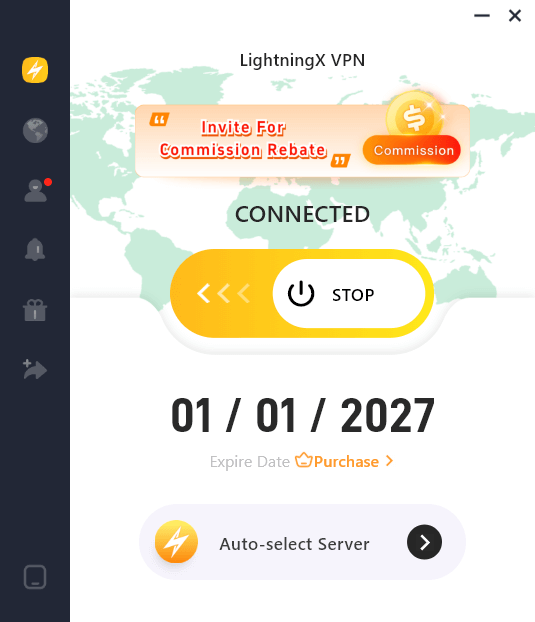
If you suspect your local network is blocking Apple’s servers, a premium tool is the best fix. LightningX VPN offers optimized servers that stabilize your connection and bypass geo-blocks.
By masking your IP address with high-speed encryption, LightningX VPN ensures seamless access to the App Store, especially if you are trying to access a store region different from your physical location.
Solution 8: Verify Cellular Data Settings
If you use mobile data, you might have accidentally disabled access to the App Store. iOS allows you to restrict data usage on an app-by-app basis.
Check your permissions:
- Go to Settings > Cellular.
- Scroll down to the list of apps using data.
- Find the App Store.
- Ensure the toggle is Green (ON).
If this was off, your phone was technically blocking itself from connecting whenever you left Wi-Fi range.
Solution 9: Change Your DNS Settings
Your ISP’s DNS (the “phonebook” of the internet) might be slow or failing to find Apple’s servers. Switching to a public DNS often speeds up the connection.
To change DNS:
- Go to Settings > Wi-Fi.
- Tap the “i” icon next to your connected network.
- Scroll to Configure DNS and switch it to Manual.
- Delete existing entries and add 8.8.8.8.
This changes the “phonebook” your device uses to find the App Store on the internet, often bypassing connection errors.
Wrap up
Resolving connectivity errors of the APP store usually requires just a few simple adjustments. By following the fixes mentioned above, you can restore access immediately. Keep your software updated and check your network regularly to ensure you never face this interruption again. Happy downloading!