Temu has taken the e-commerce world by storm with its “shop like a billionaire” slogan, but its rock-bottom prices come with hidden costs. While the platform itself is a legitimate business, it is fueled by a complex web of psychological triggers, aggressive data collection, and gamified loops that many shoppers categorize as Temu scams.
To navigate the app safely, you need to understand where the “deals” end and the traps begin. Here is a breakdown of the top five schemes currently targeting users and how to protect your digital footprint.
Temu Scam #1: The “Infinite” Free Gift & Referral Loop
If you’ve spent any time on social media recently, you’ve likely seen frantic pleas from friends asking you to “click my link” or “help me get my last $0.01.” This is the heart of Temu’s most controversial tactic: the Infinite Free Gift and Referral Loop.
While not a “scam” in the legal sense, it is a highly manipulative gamified system designed to harvest your data and social connections. Here is how the “loop” traps you:
- The 99% illusion: The game (such as Hat Trick Draw or 5 Free Gifts) starts by giving you massive progress. Within seconds, it looks like you are only $1 or one “energy point” away from a $200 haul.
- The moving goalposts: As you get closer, the rewards diminish. That final $1 suddenly breaks down into $0.10, then $0.05, and eventually $0.01. Just when you think you’ve won, the app informs you that you now need “New App Users” only – existing friends no longer count.
- The 24-hour pressure cooker: These games expire within 24 hours. This creates a “sunk cost” fallacy, where users feel forced to spam their entire contact list to avoid losing the “progress” they’ve already made.
Scam #2: Fake “Tree Games” & Reward Withdrawal Hurdles
Temu’s “Tree Games,” like “Farmland” or “Fishland”, are less about gardening and more about psychological exhaustion. These games bait you with high-value rewards – an espresso machine or a designer bag – for the seemingly simple task of “watering” a virtual plant daily. The deception lies in the progress bar. While the first 90% of your tree grows in minutes, the final 0.1% is designed to take weeks or even months.
As you get closer to the prize, the “water” rewards dry up, forcing you to browse endless product pages or badger your friends to join just to move the needle a fraction of a percent. It’s a classic play on the sunk cost fallacy: you’ve already invested so much time that you feel you can’t quit, even as the app endlessly moves the goalposts. In the end, you aren’t playing a game; you are providing Temu with weeks of consistent daily active usage and data tracking in exchange for a prize that may never materialize.
Scam #3: Phishing Ads & Social Media “Freebie” Links
The most dangerous Temu-related threats often happen off the platform entirely. Scammers flood TikTok, Facebook, and WhatsApp with fake “Temu $800 Coupon” or “Free Pallet” ads that lead to counterfeit websites. These are pure phishing operations. Once you click, you are prompted to enter your login credentials or, worse, your credit card info to “pay for shipping” on a prize that doesn’t exist.
The logic here mirrors a standard PayPal scam email: create massive hype, demand immediate action, and steal the data before the victim realizes the URL is fake.
These external links are designed to bypass the security of the actual app, catching users while they are hunting for “hidden” deals on social media. The reality is simple: any legitimate Temu promotion will be handled within the app itself. If you are being asked to click an external link to claim a massive reward, you are being hunted by a phisher, not given a discount.
Temu Scam #4: “Brushing” & Fraudulent Product Listings
Ever wonder why a product with 50,000 five-star reviews arrives looking like it was salvaged from a landfill? Welcome to the world of “Brushing.” This is one of those Temu scams that plays a psychological game with your trust. Sellers pay people to place fake orders and write glowing testimonials, artificially inflating their rankings so they land in your “Recommended” feed.
You aren’t just getting a low-quality item; you are participating in a rigged system. The real danger here is that these shady sellers often harvest your shipping address and phone number to sell to marketing brokers. A key rule among Internet Safety Tips is to treat every “too good to be true” review as a red flag. If the price feels impossible, it’s usually because you (and your data) are the actual product being sold.
Scam #5: Data Harvesting & Privacy Overreach
Let’s be blunt: the biggest risk on Temu isn’t a $2 losing streak on a fish game; it’s the sheer volume of data the app tries to vacuum up from your phone. From tracking your exact GPS location to accessing your clipboard and device ID, the platform builds a digital ghost of your entire life.
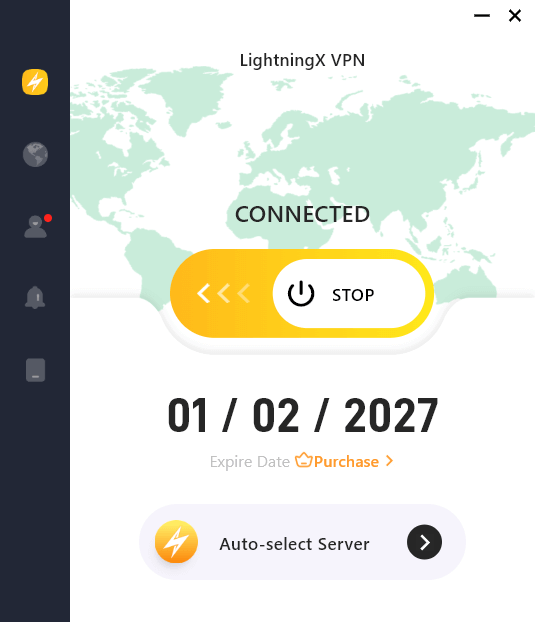
This isn’t just about targeted ads; it’s about long-term privacy erosion. To fight back, savvy users are turning to LightningX VPN as a standard part of their setup. By routing your traffic through an encrypted tunnel, it essentially “blinds” the app’s ability to pinpoint your home network or track your physical movements across different Wi-Fi points. It’s a simple, high-impact move that keeps your personal business out of their database.
How to Protect Yourself: Pro-Tips for Safe Shopping
Navigating Temu doesn’t have to be a gamble if you stop treating it like a game and start treating it like a data-hungry marketplace. To keep your money and your identity intact, follow these ground rules:
- Burner emails and virtual cards: Never give these platforms your primary “life” email or your direct bank card info. Use a secondary email address for sign-ups and pay via third-party services like PayPal or “burner” virtual credit cards. This way, if the platform suffers a data leak, your main bank account remains untouched.
- Audit your permissions: When you install the app, it will ask for everything – your contacts, your precise location, even access to other devices on your network. Deny them. A shopping app does not need to know your GPS coordinates to ship a package to your door.
- The “One-Star” filter: Ignore the glowing five-star reviews on the front page. If you want the truth about a product, filter for the one-star reviews that include photos. These are much harder to fake via “Brushing” and will tell you exactly how thin that “premium” hoodie actually is.
The Bottom Line
Temu is a legitimate marketplace, but it’s built on a foundation of psychological traps and aggressive data mining. Whether it’s the “infinite” referral loops or the gamified “free” gifts, the platform is designed to harvest your attention and personal information in exchange for low-cost goods.