Setting up a VPN on your iPhone doesn’t have to be complicated. In this guide, we’ll show you how to turn on VPN on iPhone using the ultra-simple VPN app, as well as how to configure settings manually. We’ll even share a pro tip on how to automate your connection, so it turns on the moment you open your favorite apps.
How to Set Up a VPN on iPhone?
Many people aren’t aware that there are two ways to use a VPN on an iPhone: one-click activation via a dedicated app, or manual configuration through the system settings.
Method 1: Using a VPN App
This is the simplest way if you want quick access. First, choose a professional VPN service like LightningX VPN. The app itself handles all the technical configuration for you behind the scenes.
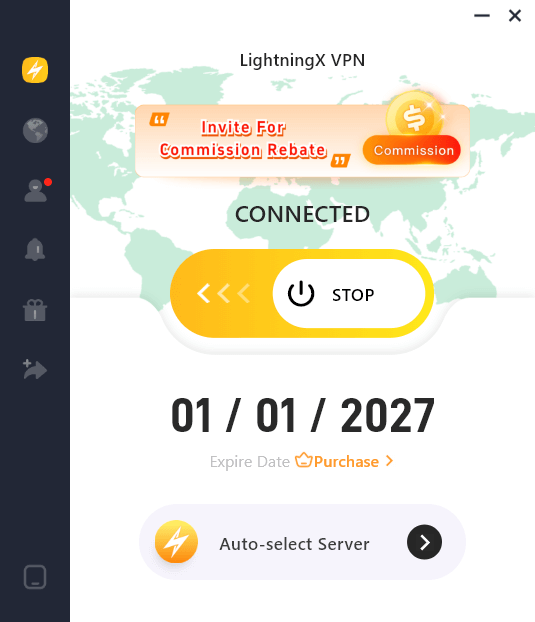
Here is how to do it:
Step 1: Download the App
First, head over to the iOS App Store and search for “LightningX VPN.” Download and install the app on your iPhone.
It’s designed specifically for iOS with IKEv2, so it integrates perfectly with your system’s network settings.
Step 2: Sign In or Create an Account
Open the app and log in with your credentials. If you’re a new user, you can quickly sign up. Once you’re in, you’ll see a clean, intuitive dashboard that shows your current connection status and a list of available servers.
Step 3: Choose a Server (Optional)
If you have a specific goal, like unblocking a game or accessing content from a different country, tap on the server list. You can choose from high-speed nodes in over 70 countries. For the fastest performance, you can simply stay on the “Smart Connect” or “Auto” option.
Step 4: Turn on a VPN on iPhone with One-Click
Tap the Connect button in the center of the screen. The first time you do this, your iPhone will show a standard iOS system pop-up asking for permission to “Add VPN Configurations.” Tap Allow and enter your passcode or use FaceID to confirm.
Method 2: Manual Configuration via iOS Settings
If you prefer not to install an extra app, or if you are in a region where the App Store is restricted, you can set up a VPN manually using the iPhone’s built-in network settings.
- Navigate to VPN Settings: Go to Settings > General > VPN & Device Management.
- Add Configuration: Tap on VPN and then select Add VPN Configuration….
- Enter Server Details: Select IKEv2 (the most stable protocol for iOS). Then give it a name (e.g., “– VPN Manual”). Log in to your account on their website to find the specific server address and Remote ID assigned to you.
- Authentication: Enter your username and password provided in your account dashboard.
- Save and Connect: Tap Done. You will now see a VPN toggle switch directly in your main Settings menu. Simply flip it on whenever you need to unblock games or browse privately.
How to Add a VPN Toggle to Your Control Center (iOS 18)
With the latest iOS updates, you no longer have to dig through your Settings menu every time you want to secure your connection. You can now add a dedicated VPN toggle directly to your Control Center for instant access.
- Open control center: Swipe down from the top-right corner of your screen.
- Enter edit mode: Long-press on any empty space or tap the plus (+) icon at the top left.
- Add a control: Tap Add a Control at the bottom.
- Search for VPN: Type “VPN” in the search bar or scroll down to the connectivity section.
- Place the toggle: Select the VPN icon, and it will appear on your panel. You can now resize it or move it to your preferred spot.
Troubleshooting: Why Your iPhone VPN Won’t Turn on
If you find that your iPhone VPN is not working or is stuck on “Connecting” or refuses to switch on, here is how to fix the most common problems.
Why does my iPhone VPN keep disconnecting or not connecting at all?
- Network switching (Wi-Fi to 5G): iPhones often struggle to maintain a VPN tunnel when you move between different networks, such as leaving your house and switching from Wi-Fi to 5G. This “handover” can cause the connection to drop. To fix this, try toggling your Airplane Mode on and off to reset the radio, then reconnect your VPN.
- Change VPN protocol: Some firewalls (especially in schools or offices) are specifically designed to block certain types of traffic. If IKEv2 isn’t working, go into the VPN settings and switch to a stealthier protocol like VLESS or Shadowsocks. These are much harder for firewalls to detect and can often bypass strict blocks where others fail.
- Check your subscription status: It sounds simple, but a common reason for a failed connection is an expired plan. Log in to your account or check the app dashboard to ensure your subscription is active. If you are using free nodes, keep in mind they may occasionally reach capacity, so try switching to a different free location.
- Device fatigue: Like any other app, the iOS network stack can occasionally glitch. If you’ve tried everything and it still won’t connect, a quick restart of your iPhone can clear the system cache and resolve the issue.
- Update VPN software: If you are using a VPN app, ensure you are running the latest version from the App Store.
Pro Tip: How to Automate Your VPN Connection
If you want to reach the next level of convenience, you can create a new personal automation in Shortcuts to handle the connection for you. Instead of manually opening an app every time, you can use the built-in iOS Shortcuts app to create a “set-and-forget” automation.
The Universal Setup Guide
Regardless of your specific needs, the core process follows these simple steps:
- Open shortcuts: Find the Shortcuts app (pre-installed on your iPhone) and tap the Automation tab at the bottom center.
- Create new automation: Tap the “+” icon to start a new setup.
- Choose your trigger: This is where you decide when the VPN turns on.
- To trigger by App: Select App, choose your game (like Roblox), and ensure “Is Opened” is checked.
- To trigger by Location: Select Wi-Fi and pick your school or office network.
- Set to “Run Immediately”: This is the most important step! Make sure you select Run Immediately so the VPN connects without asking for your permission every time.
- Assign the action: Tap Next, then search for VPN APP. Choose the “Connect” action and tap Done.
Small Tweaks for Different Scenarios
While the steps above work for everything, keep these minor differences in mind:
- For Gaming Apps: It’s a one-way street. Once you close the game, the VPN usually stays on unless you create a second automation for “When App is Closed.”
- For School Wi-Fi: We highly recommend creating a matching “Disconnect” automation. Simply repeat the steps above, but choose “When I Leave” the Wi-Fi and set the action to “Disconnect — VPN.” This saves your battery the moment you head home.
FAQs: Everything You Need to Know About iPhone VPNs
Q1. Why does my App Store region change when I turn on my VPN?
Simply turning on a VPN does not change your App Store region (that requires changing your Apple ID settings). However, some websites and apps may show you prices or content in a different currency or language because they detect your VPN’s server location. If you want to see local content again, just disconnect the VPN or switch to a server in your home country.
Q2. Will using a VPN on my iPhone drain my battery?
All VPNs use some battery because they require extra processing power to encrypt your data.
By using the IKEv2 protocol, the impact on your battery is minimal compared to older protocols. To save even more power, you can use the “Shortcuts” automation mentioned above to ensure the VPN only runs when you are actually using specific apps.
Q3. Does an iPhone VPN hide my activity from my ISP or School Wi-Fi?
Absolutely. Once you tap “Connect” in the VPN app, an encrypted tunnel is created. Your Internet Service Provider (ISP) or school network administrator will be able to see that you are connected to a VPN, but they cannot see which websites you are visiting.